The Great Wave off Kanagawa by Hokusai
This painting is originally a woodblock ink print. When I look at the artwork, it evokes a sense of turmoil. The sailors, who appear tiny and insignificant, are, in reality, crucial to the scene. It captures the fear one experiences when facing a massive, powerful wave. There’s something deeply violent yet undeniably beautiful about this painting. It reveals the beauty within the wrath of nature.
Metaphorically, it aligns with the saying, “Progress out of conflict.” The colors evoke warmth, while the intricate detail of each wave inspires awe and fear. It’s fascinating how no element is identical, yet everything complements one another so harmoniously.

Fine Wind, Clear Morning by Hokusai
This is a clear and vibrant painting by Hokusai, created using block-print techniques. The artwork offers viewers different perspectives, which is its most essential element. To achieve this, there are no shadows present in the composition.
The mountain depicted is Mount Fuji, which also appears in the background of The Great Wave off Kanagawa. Here, the background seems to merge water and clouds, creating an ambiguous and dynamic visual effect. Depending on the viewer's perspective, they may interpret the scene as looking down from a high vantage point onto water below or looking up at the sky from a low ground position.

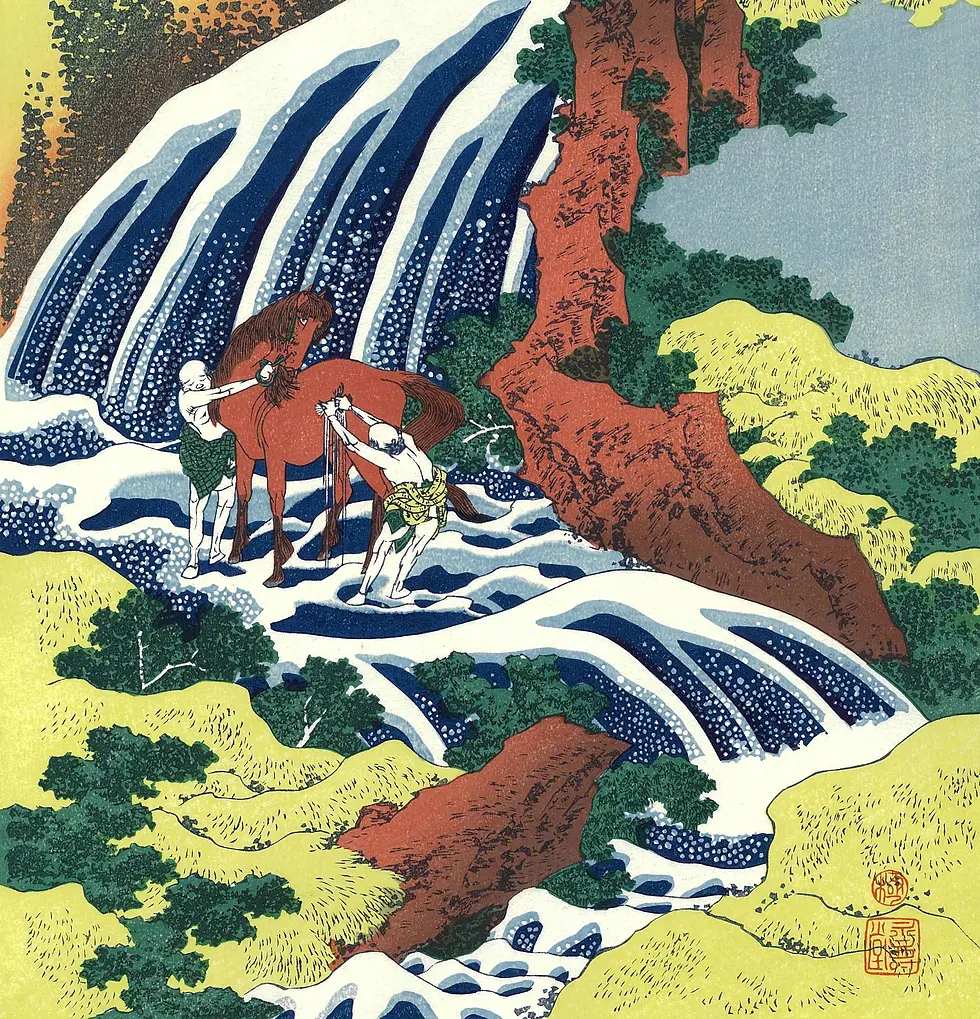
Washû Yoshino Yoshitsune uma arai no taki
by Hokusai
Perspective plays a significant role in this painting. It depicts Yoshitsune washing his horse at the Yoshino waterfall in Yamato Province, surrounded by the surrounding land. What fascinates me is how they appear to be standing in the middle of the water body.
Another intriguing aspect of the painting is how it also gives the impression that they are standing on the edge of a cliff or climbing a mountain. This effect is achieved through the use of brown shades along the sides of the waterfall.
This is one of Hokusai's most famous works.